Finding a low-down-payment mortgage can be frustrating when home prices and upfront costs make it…
Can We Use a USDA Loan to Buy a Home Outside Louisville?
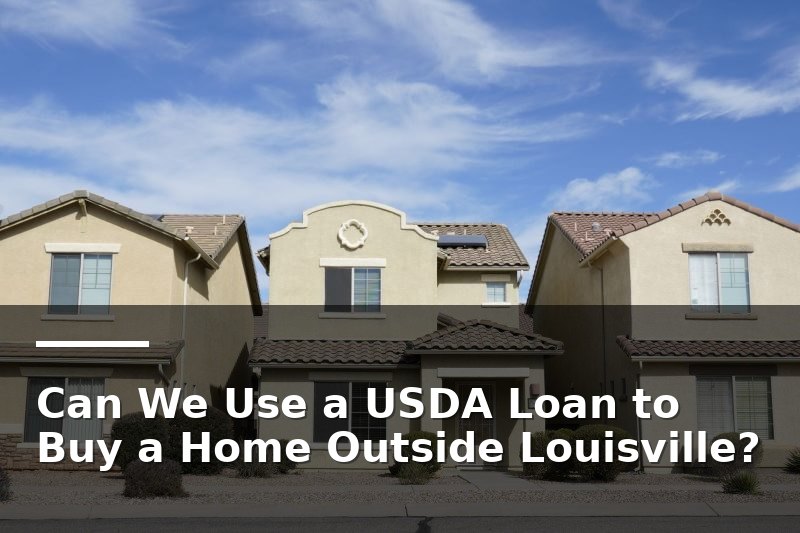
Finding an affordable home outside Louisville can open more possibilities, but it may be difficult to know which properties qualify for rural financing. A USDA loan can be used to buy an eligible primary residence outside Louisville when both the property location and the household meet current USDA requirements. In this guide, we at First Fidelity Mortgage, Inc (NMLS# 940549) explain how location, household income, property condition, and lender approval affect USDA eligibility.
Key Takeaways
- Location: The home must be within an area currently designated as eligible by the USDA.
- Down Payment: USDA financing generally allows eligible borrowers to purchase with 0% down, although closing costs and cash reserves may still apply.
- Income: USDA evaluates income from qualifying borrowers and income from other household members under separate calculations.
- Property: The home must be a primary residence and satisfy USDA, appraisal, lender, and applicable property requirements.
- Best For: USDA loans may fit buyers seeking a primary home in an eligible community outside the Louisville urban area.
Quick Answers About USDA Loans Near Louisville
- Is every home outside Louisville USDA-eligible? No. Eligibility is determined by the USDA property map, not simply by whether the mailing address is outside Louisville.
- Does a USDA loan require a down payment? Eligible borrowers can generally finance the purchase with 0% down, subject to approval and program guidelines.
- Do we have to be first-time homebuyers? No. USDA loans do not generally require first-time buyer status.
- Can part of Jefferson County qualify? Eligibility is address-specific and can change, so each property should be checked on the current USDA map.
How USDA Property Eligibility Works Outside Louisville
USDA property eligibility is based on defined geographic boundaries rather than a simple city-versus-rural distinction. A home can have a Louisville-area connection or be near a developed corridor and still require an address-level review. Conversely, a property that feels rural is not automatically eligible.
The USDA updates eligible-area boundaries based on factors such as population and development. This creates a patchwork around metropolitan areas: one address may qualify while a nearby property does not.
For buyers looking beyond central Louisville, homes in smaller communities and less densely developed portions of surrounding counties may be more likely to qualify. However, we should verify the exact street address rather than rely on a city name, ZIP code, listing description, or a seller’s statement.
How to Check a Property Address
- Use the current USDA property eligibility map.
- Select the appropriate single-family housing program.
- Enter the complete property address.
- Review whether the map identifies the address as eligible.
- Ask a mortgage professional to confirm the result and review any boundary questions.
An online map result is a valuable first step, but it is not a loan approval. USDA guidelines, lender requirements, income eligibility, appraisal findings, and the borrower’s complete application must also be reviewed.
USDA Eligibility Includes More Than the Property Map
A qualifying address is only one part of the process. USDA eligibility has two separate sides: borrower eligibility and property eligibility. A loan generally cannot proceed unless both sides meet current requirements.
Borrower and Household Requirements
USDA Guaranteed Loans are generally intended for borrowers purchasing a primary residence with an eligible location and qualifying household income. Common review areas include:
- Stable, documentable income
- Acceptable credit history under current program and lender guidelines
- Sufficient income to support the proposed payment and existing debts
- Occupancy of the property as a primary residence
- Household income within the USDA limit for the property’s area and household size
USDA household income is not always the same as mortgage qualifying income. Qualifying income determines whether the borrowers can repay the loan. Household income is used to determine program eligibility and may include income from adult household members who are not borrowers, subject to USDA rules and permitted deductions.
This difference matters when several income-earning adults will live in the home. A borrower may have enough qualifying income for the mortgage but exceed the USDA household income limit. Income limits vary by location and household size, so current figures should be checked for each scenario.
Property and Occupancy Requirements
The home must generally be residential, safe, structurally sound, and suitable for year-round occupancy. USDA financing is not designed primarily for vacation homes, second homes, or income-producing investment properties.
The appraisal reviews market value and property condition. Depending on the property, additional inspections or repairs may be needed before closing. Individual lenders may also apply overlays that are more restrictive than the minimum program rules.
What 0% Down Really Means
A 0% down payment does not necessarily mean buying a home with no out-of-pocket expense. Buyers may still need funds for items such as an earnest-money deposit, inspection, appraisal, prepaid taxes, homeowners insurance, and closing costs.
Some costs may potentially be addressed through seller-paid costs, eligible assistance, lender credits, or financing the USDA guarantee fee when permitted. Availability and structure vary by transaction, and a larger seller credit does not automatically improve an offer or eliminate every cash requirement.
USDA loans also include guarantee fees that help support the program. These costs are structured differently from conventional private mortgage insurance or FHA mortgage insurance, and the applicable amounts can change. We recommend comparing the estimated monthly payment and total cash needed rather than focusing only on the down payment.
For a broader program explanation, review our USDA loan options.
USDA Compared With Other Louisville-Area Loan Options
If a property is outside the eligible USDA boundary—or household income is above the applicable limit—another loan program may provide a workable structure. The right comparison depends on credit, available funds, military eligibility, property type, and the expected length of ownership.
| Loan Type | Minimum Down Payment | Location Restriction | Key Consideration |
|---|---|---|---|
| USDA | Generally 0% | Yes | Household income and property address must qualify. |
| Conventional | Programs may start at 3% | No USDA boundary | Mortgage insurance and pricing vary with the file. |
| FHA | Generally 3.5% | No USDA boundary | Includes FHA mortgage insurance and property standards. |
| VA | Often 0% for eligible borrowers | No USDA boundary | Requires qualifying military service and VA eligibility. |
Buyers considering a lower-down-payment alternative can compare USDA with an FHA home loan. Eligible service members and veterans may also want to review the VA home loan program, which does not use USDA geographic or household income limits.
Rates, fees, mortgage insurance, underwriting requirements, and program guidelines can change. Comparisons should use current estimates based on the same purchase price, property, and expected closing date.
How to Plan a USDA Home Search
USDA planning is most effective before touring a large number of homes. A practical process looks like this:
- Review household income. Identify all adults expected to occupy the home and determine which income sources USDA may count.
- Complete a pre-approval review. Provide income, asset, credit, and debt documentation so the loan structure can be evaluated.
- Set a realistic payment range. Include principal, interest, property taxes, homeowners insurance, and applicable USDA fees.
- Search within likely eligible areas. Ask the real estate professional to consider USDA boundaries during the property search.
- Verify every address. Check eligibility before making an offer whenever possible.
- Review property condition. Consider whether visible repairs could affect appraisal or financing.
A USDA pre-approval cannot guarantee that a future property will qualify. It can, however, identify income, credit, documentation, and budget issues before the buyer is under contract.
Get Help Reviewing a USDA Scenario
If you are considering a home outside Louisville, we can help review the address, household income, estimated cash needed, and potential alternatives. Call, text, or email us to compare options, discuss pre-approval planning, and understand the next steps for your situation.
Matthew Ansert, Senior Mortgage Advisor, has 21 years of mortgage experience and is licensed in Kentucky, Indiana, and Florida. Individual NMLS #39241.
Frequently Asked Questions
Can a USDA loan finance an existing, new, or manufactured home?
USDA financing may be available for eligible existing homes, new construction, and certain manufactured homes. The property must meet program, appraisal, construction, foundation, and lender requirements applicable to that property type.
How does USDA calculate income when another adult lives in the home?
USDA may count income from adult household members when determining whether the household is within the program’s income limit, even if that person is not a borrower. The income used to qualify for repayment can be different, so both calculations should be reviewed separately.
What happens if the USDA appraisal identifies repairs?
Repairs affecting safety, structural soundness, or program requirements may need to be completed and verified before closing. The exact resolution depends on the appraisal findings, contract terms, property, USDA guidelines, and lender requirements.
Can seller credits or down payment assistance be used with a USDA loan?
Seller credits and eligible assistance may be permitted within current program limits, but they must be documented and structured correctly. Availability varies by transaction, assistance program, lender, and the buyer’s actual closing costs.
How long does it take to close a USDA purchase loan?
The timeline varies based on appraisal availability, documentation, underwriting, required repairs, and any USDA review involved. Buyers should build flexibility into the contract and provide requested documents promptly to help keep the process moving.
This is educational and not financial advice. Loan programs and guidelines can change. Talk with a licensed mortgage professional about your specific scenario.

About the Author
Matthew Ansert
Senior Mortgage Advisor at First Fidelity Mortgage, Inc · NMLS #39241
A Louisville native; he graduated from St Xavier High School and University of Louisville with a major in Accounting. Soon after graduating he started his career as a mortgage loan originator and now has over 20 years’ experience in the industry.
Specializes in: Conventional, FHA, VA
Licensed in: FL, IN, KY
Related Posts